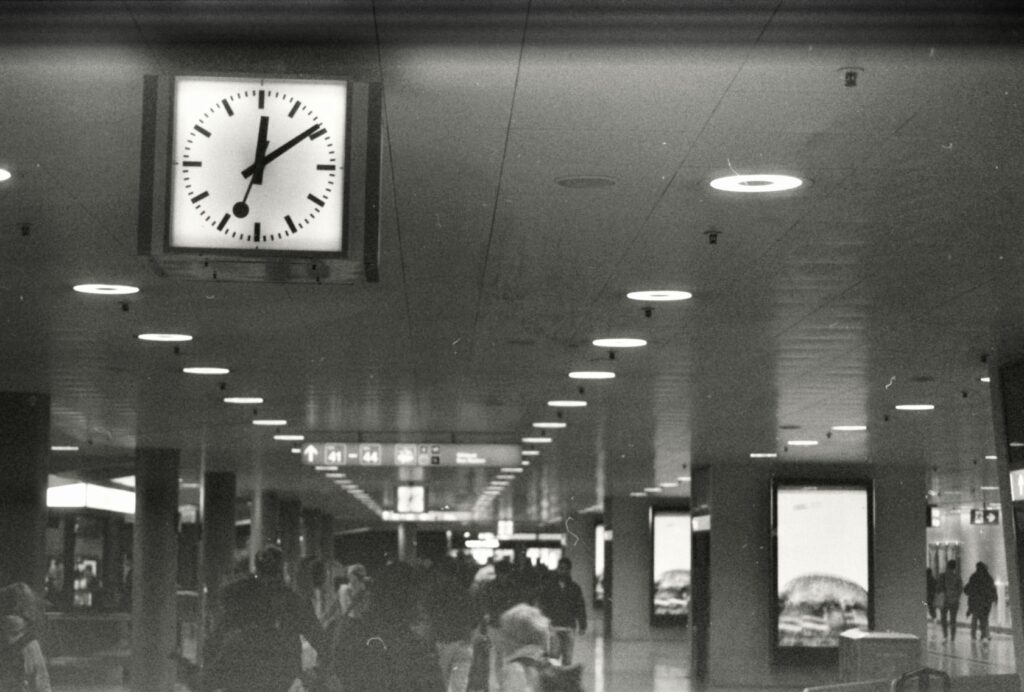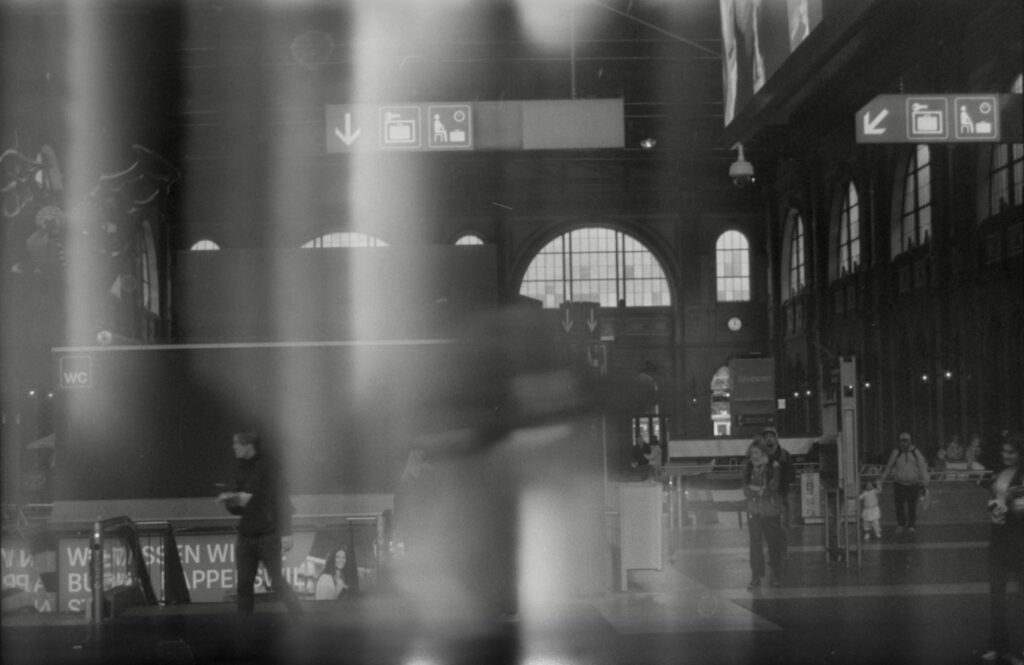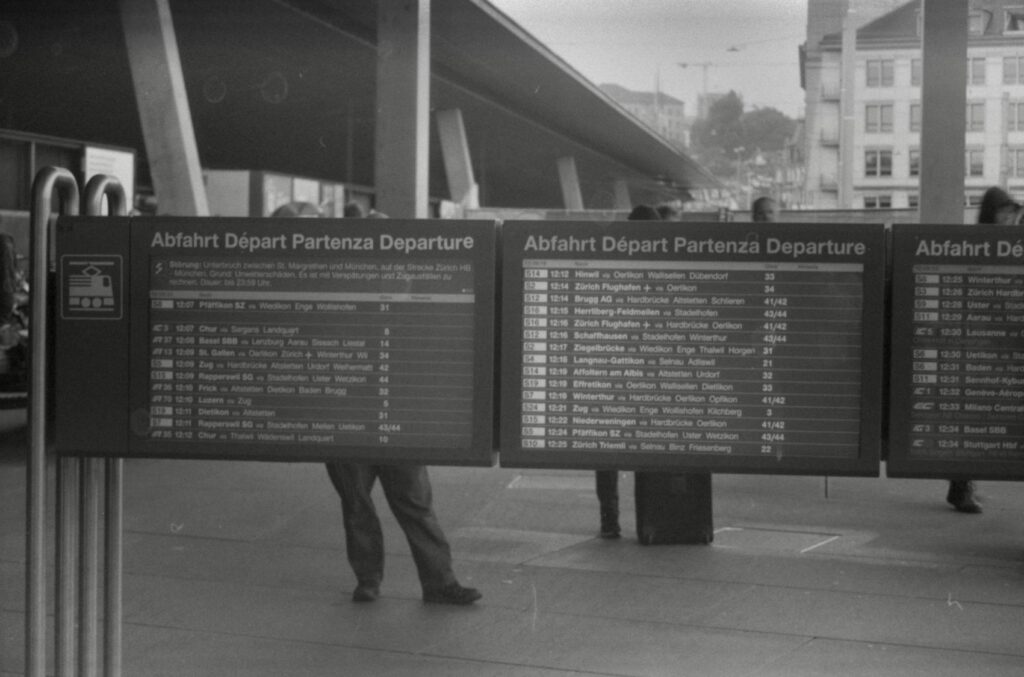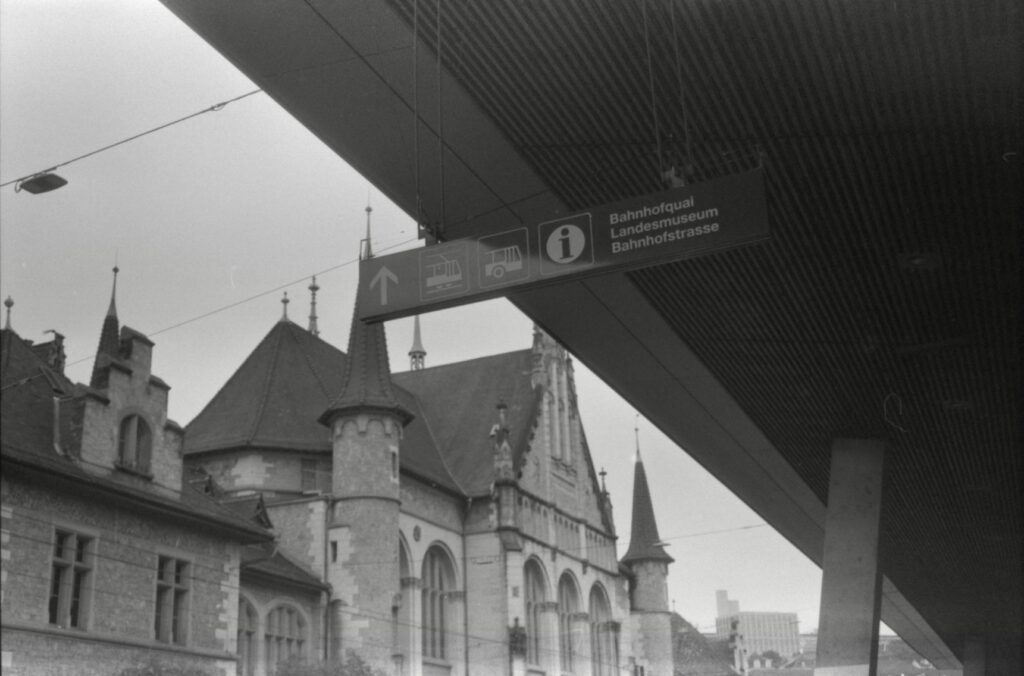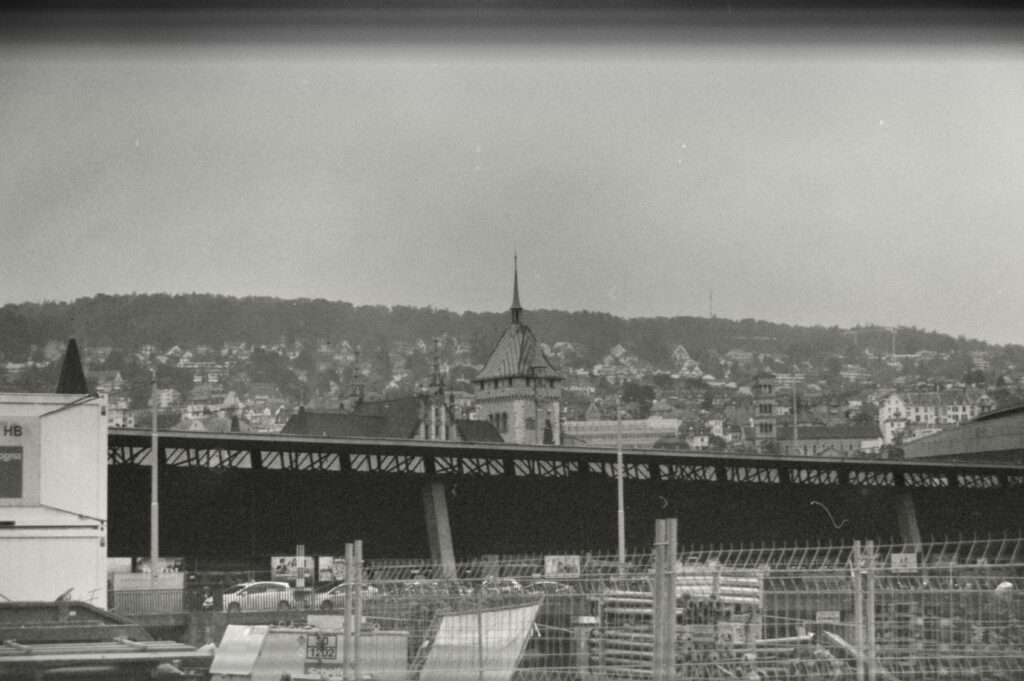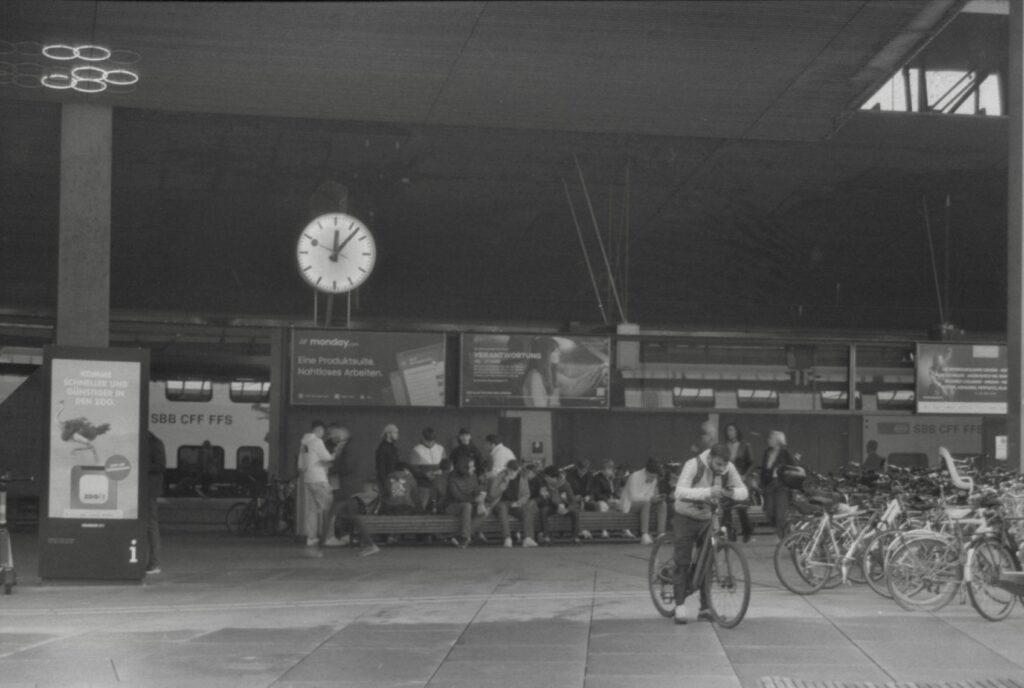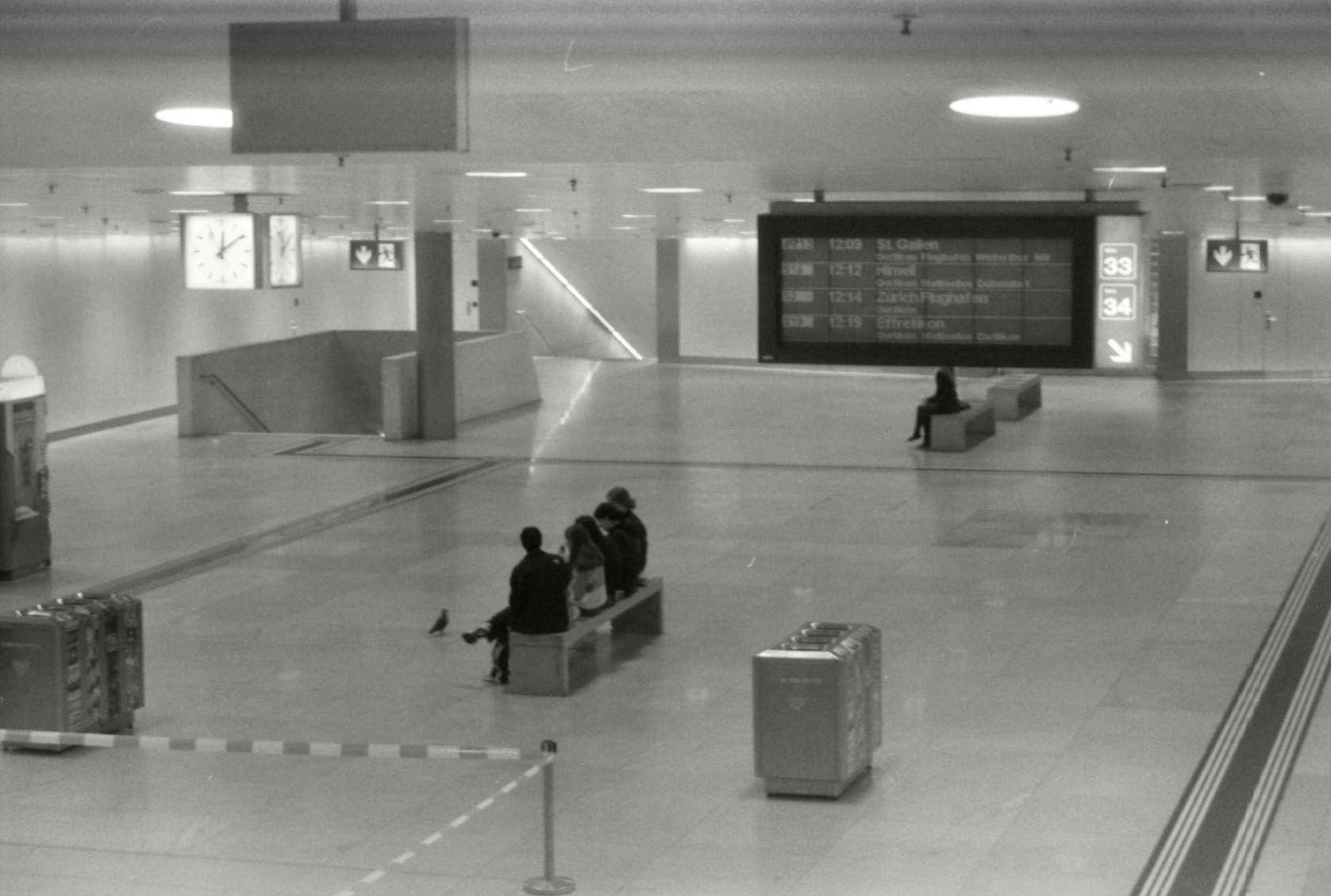
This projects considers train stations as liminal spaces, which refers to areas of transition, often perceived as places where regular rules of time and space are suspended. It approaches a possible dual function for these transport hubs: as points of transit and as refuges for marginalised individuals.

The accompanying essay analyses this dual role using ‘Perron Nul’ in Rotterdam and ‘Platzspitz’ in Zurich as case studies. It explores the duality of train stations as hubs of transit and final destinations for those with nowhere else to go.

The accompanying creative project reimagines wayfinding in train stations to reflect the directionlessness experienced by marginalized individuals who use these spaces as temporary refuges. Traditional wayfinding designs focus on guiding people efficiently from point A to point B. In contrast, this project introduces signs intended to evoke empathy and awareness. Through reconsidered iconography, abstract paths, and placement, these redesigned signs aim to capture the uncertainty and liminality faced by those on the fringes of society, transforming train stations into more inclusive and compassionate urban environments.