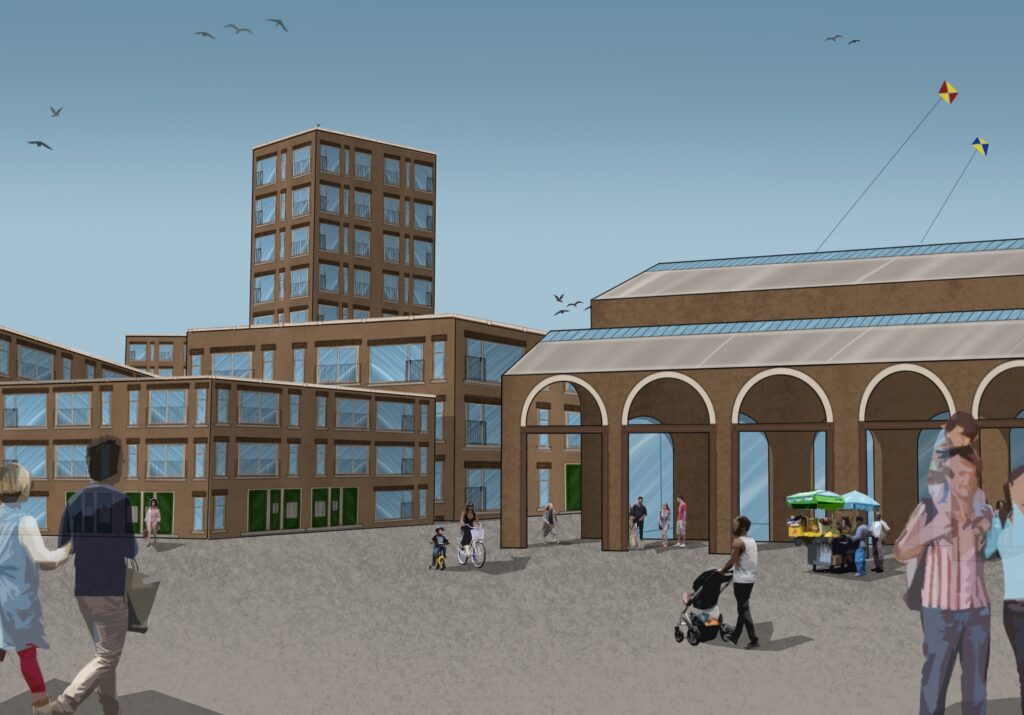
Masterplan Gustowerf
The revitalisation plan for the former Gusto Shipyard in Schiedam envisions transforming the site into a new residential neighbourhood with space for entrepreneurship.
The proposal aims to rebuild the original structure with a new mixed-use function, alongside a significant number of newly constructed residential buildings. The architectural industrial heritage of the site plays a central role in shaping the design of the new neighbourhood, ensuring that it maintains a strong connection to its historical roots while adhering to modern building standards.
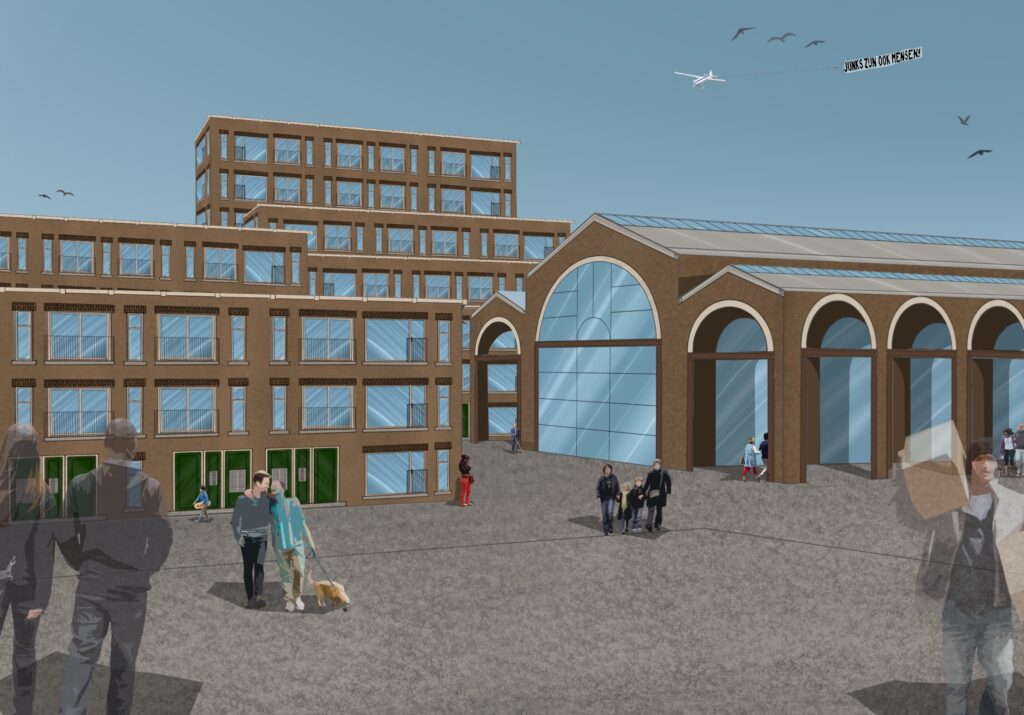
A large multifunctional plaza will serve as the heart of the neighbourhood, strengthening the connection between the newly built area and the existing communities. To ensure that the plaza remains accessible and inviting in all weather conditions, the two halls bordering it will feature covered promenades, with arches that follow the same rhythmic patterns as the original windows.
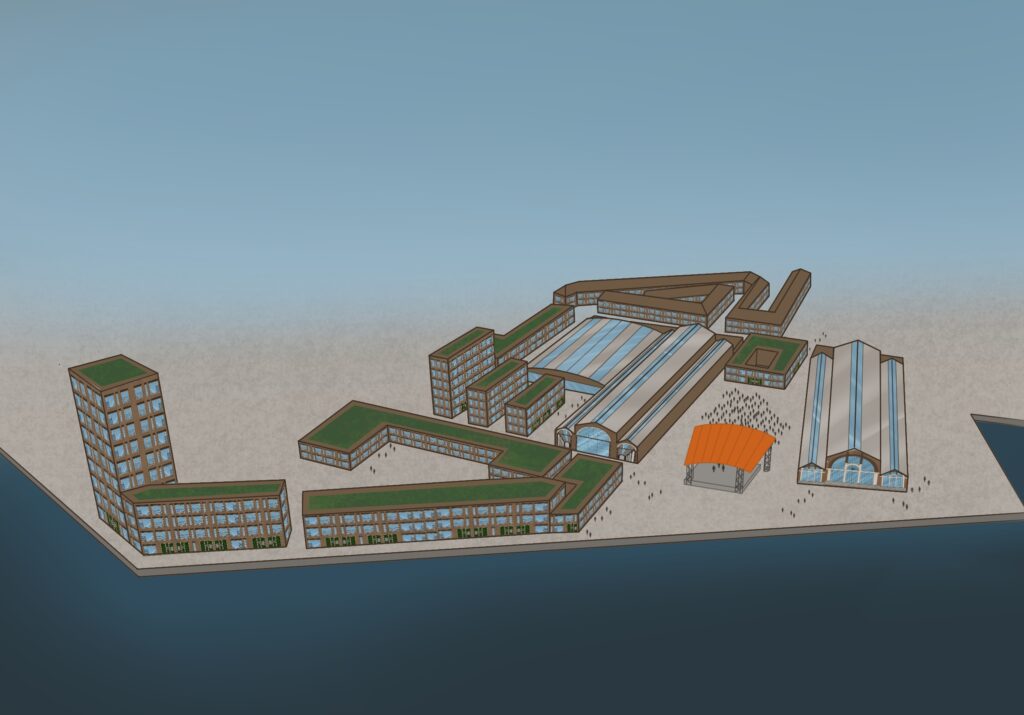
A key aspect of the proposal is the reconstruction of historic industrial facades, using them as inspiration for a modern architectural interpretation.
The footprint of the Gusto Shipyard will be reinterpreted in a modern way, with newly constructed residential buildings following a similar architectural typology. While these new structures will meet contemporary living standards, successful urban design strategies from the era of the original shipyard will be incorporated into their planning.

010 Vision 2050
The methodology I propose focuses on redeveloping large industrial areas by subdividing them into smaller neighbourhoods, each with a distinct architectural identity inspired by the site’s industrial heritage. This approach ensures historical continuity while adapting spaces for modern urban needs.
In Rotterdam, where maritime industry plays a key role, this method would transform Merwehaven into seven neighbourhoods, each reflecting the port’s industrial past. Some areas would feature adaptive reuse of existing structures, while others would see the reconstruction of historic buildings in a modern interpretation.

To foster interaction between new and existing communities, each neighbourhood would include a functional centrepiece, such as a cultural institution or entrepreneurship hub, tailored to local needs.


The Masterplan Gustowerf exemplifies this method, applying industrial heritage-inspired urban renewal to the former Gusto Shipyard. By blending historic reconstructions, contemporary design, and public spaces, it demonstrates how this approach can preserve history while enabling sustainable urban transformation.